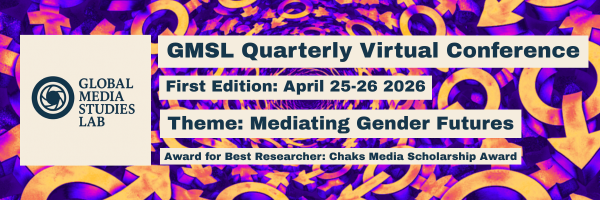
The Global Media Studies Lab (GMSL) is the media research and practice wing of the Institute of Research and Scholarly Training, India, based in Chennai. GMSL fosters dialogue between scholarship and media practice through curated masterclasses, field reflection talks, and studio reflection sessions. We believe the future is cultivated within an inclusive laboratory comprised of ideas, inquiries, and dialogues. The GMSL Quarterly Virtual Conference Series assembles scholars and practitioners to examine the ways in which media systems, cultural narratives, and technological infrastructures influence the futures we envision and those we actively construct.
Inaugural Edition: Mediating Gender Futures
The inaugural edition of the series, announced on International Women’s Day 2026, explores the theme Mediating Gender Futures. The virtual conference will be held on Google Meet from 25–26 April 2026, 10:00 am to 9:00 pm IST each day.
Call for Papers & Presentations
Researchers, scholars, and practitioners are invited to contribute papers and projects that critically engage with the theme Mediating Gender Futures. The conference welcomes interdisciplinary perspectives that examine how media technologies, cultural narratives, institutional structures, and communicative practices shape the ways gender is represented, negotiated, and transformed across contemporary and emerging media environments.
Possible Areas of Inquiry
- Gender and emerging media technologies
- Algorithmic media, AI, and gender representation
- Gender in digital cultures and platform societies
- Gender-based violence and media discourse
- Media, law, and public debates on gender justice
- Media industries, production cultures, and gendered labour
- Media, labour, and gendered economies
- Queer, feminist, and intersectional media practices
- Caste, race, and intersectional hierarchies
- Indigenous and decolonial knowledge systems
- Gender, trauma, memory, and conflict
- Care, reproduction, and social infrastructures
- Gendered imaginaries in popular culture and speculative media
- Audiences, reception, and the mediation of gender
- Historical perspectives on gender and media
- Global, postcolonial, and transnational perspectives on gender and media
- Media activism, advocacy, and community media
- Embodiment, identity, and everyday media practices
- Critical outer space studies and gendered futures
- Media, technology, and the governance of gender
Conference Presenter Registration Process
The GMSL Quarterly Virtual Conference adopts a first-come, first-served registration model for presenters, rather than a peer-reviewed abstract selection process. In keeping with the inclusive spirit of the conference, this approach is designed to create an open forum where a wide range of scholars and practitioners can share emerging ideas and ongoing research.
A total of 60 presentation slots are available across the two days of the conference. The programme will be organised into five sessions per day, with six presenters in each session. Each presenter will have 10 minutes to share their research or project. Presentation slots will be allocated in the order in which registrations are received. Registrations will close once all slots are filled, or by April 14, 2026, whichever occurs earlier.
Who Can Participate
The conference welcomes participation from scholars, media practitioners, filmmakers, artists, journalists, and independent researchers working across media, culture, and communication. Participants from related disciplines and fields of inquiry are also invited to contribute. Early-career researchers, doctoral candidates, and professionals working in media industries are especially welcome to register.
What Can Be Presented
Participants may present research papers, theoretical inquiries, case studies, media analyses, creative research projects, or practice-based work that engages with the conference theme Mediating Gender Futures. To ensure consistency in the presentation format, presenters will be provided with a 10-slide PowerPoint template that may be used during their presentation.
Conference Presenter Requirements:
Presenters must complete the registration through the designated Google Form and provide the following details:
https://forms.gle/VqV4s3d4TpVCbkky9
- Valid contact details, including mailing address
- A 200-word abstract or concept note
- A CV or professional webpage outlining academic or professional experience
- Payment of the registration fee of ₹3,000.
Conference Presenters Receive:
- A 10-minute slot to present a research paper or project
- A jury-attested Conference Presenter Certificate
- Publication of abstracts or concept notes in the Conference Proceedings (with ISBN)
- Access to the Conference Proceedings
- Access to recordings of all conference sessions
- Access to 70+ hours of GMSL MOOC recordings
- Opportunity for 10 selected projects to be developed as chapters in a peer-reviewed edited volume
- Eligibility to be considered for the Chaks Media Scholarship Award, including a trophy and a cash prize of ₹10,000, awarded by a special jury
The Chaks Media Scholarship Award
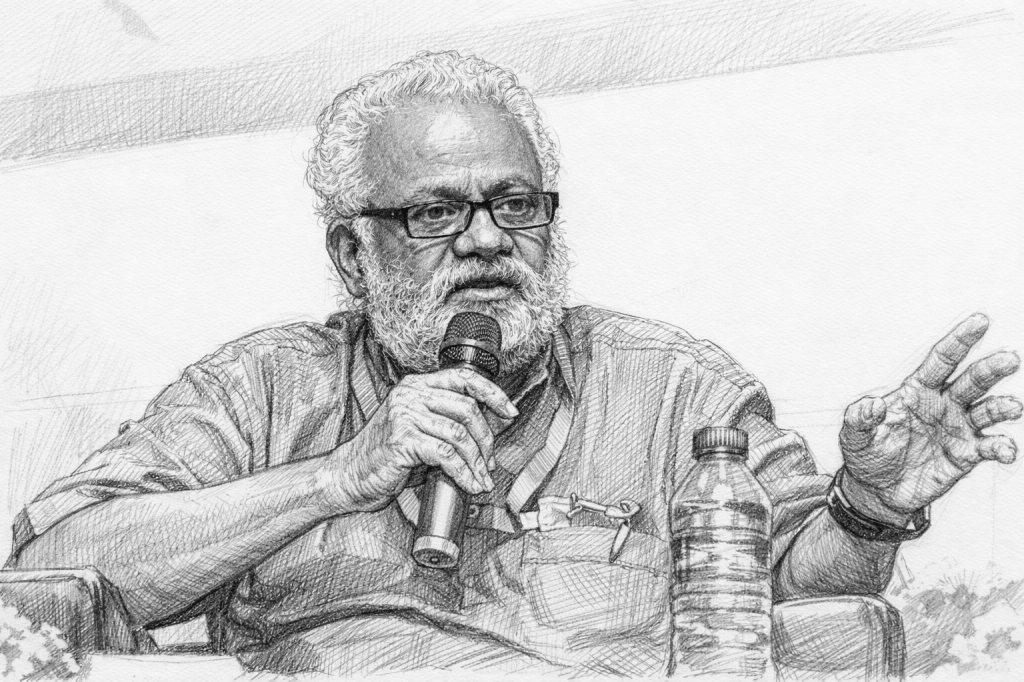
This scholarship award has been instituted in memory of Professor Venkatesh Chakravarthy, philosopher, filmmaker, film scholar, and educator. Since the 1980s, he played an important role in the development of film studies and media education in India through his involvement in film societies and his contribution to crafting syllabi for some of the earliest Visual Communication courses. Trained in philosophy, he moved fluidly between research and practice. Endearingly known as Chaks, he also ran a lyceum for knowledge exchange at his various homes.
Over the course of his career, he taught at MGR Film and Television Institute, Chennai; Madras Christian College, Chennai; Loyola College, Chennai; and the University of Sains Malaysia. He also served as Dean at MindScreen Film Institute, Chennai; the L. V. Prasad Film and Television Academy, Chennai; and SRM Film Institute, and finally retired as Dean of Ramanaidu Film School, Hyderabad.
A scholarship award honouring his service to media research and education serves as a reminder that he belonged to a generation for whom such intellectual inquiry was neither widely encouraged nor regarded as a viable field of study. In recognising his legacy, the award seeks to affirm the importance of media and cultural studies and to encourage future scholars to pursue this field with the same commitment and intellectual curiosity.
A Special Jury of media researchers and practitioners will evaluate the presentations and select one presenter to receive the Chaks Media Scholarship Award, which includes a trophy, a special certificate, and a cash award of ₹10,000. To maintain impartiality, the members of the jury will not be publicly disclosed until the award ceremony on 26 April 2026 at 7:30 pm.
A Provocation to Explore
Why gender futures? We asked several AI agents to ‘Visualise the future of gender in one image’. The resulting images offer a small but revealing glimpse into how contemporary technological systems imagine gendered futures. You are invited to examine these images critically: What assumptions about gender do they reproduce? What kinds of futures do they make visible and which possibilities remain absent?

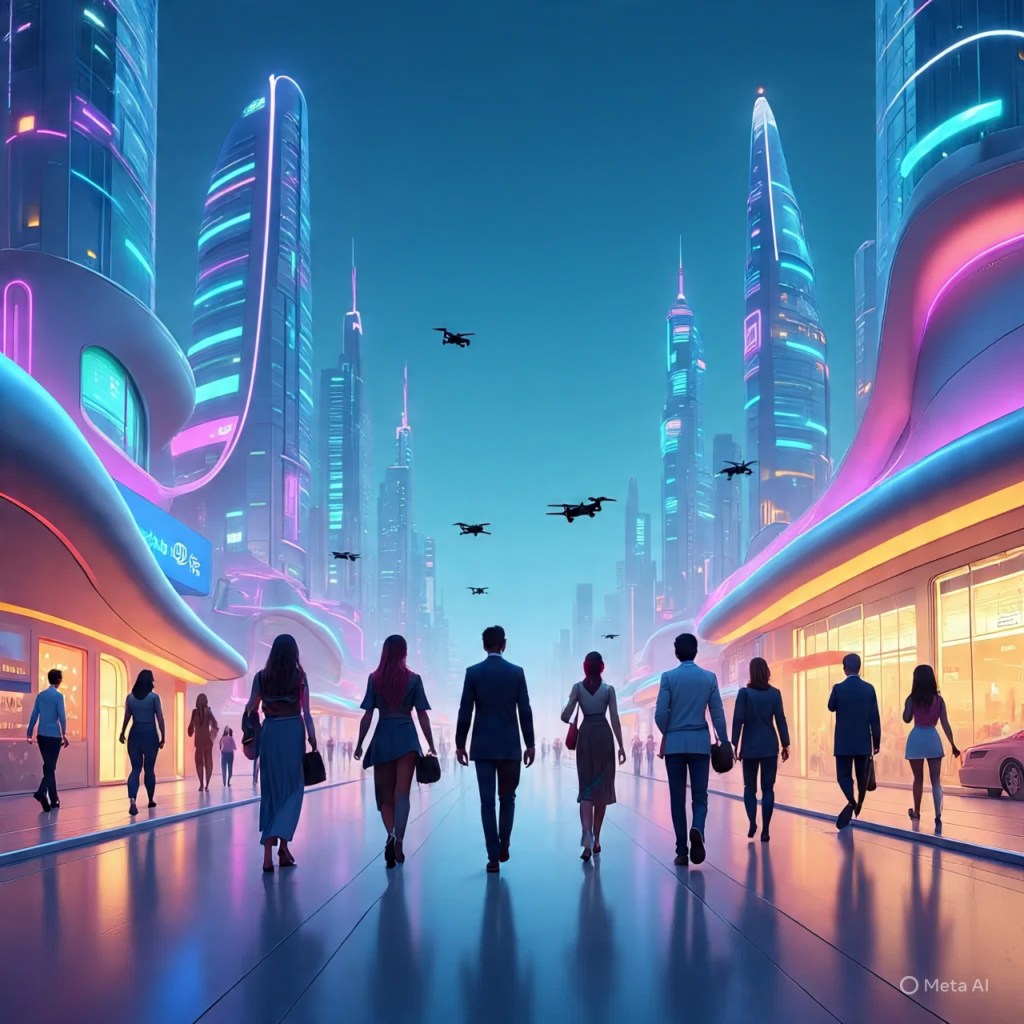
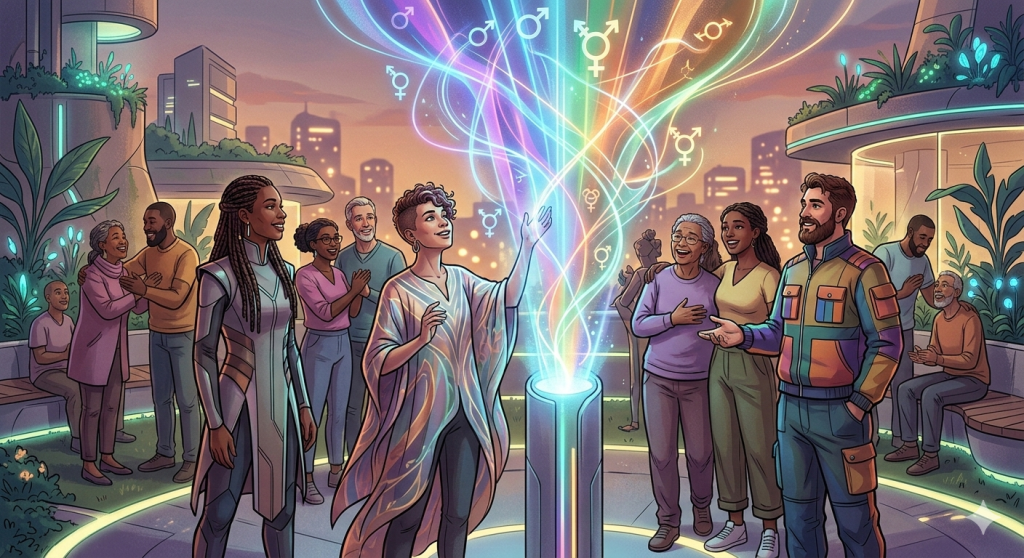
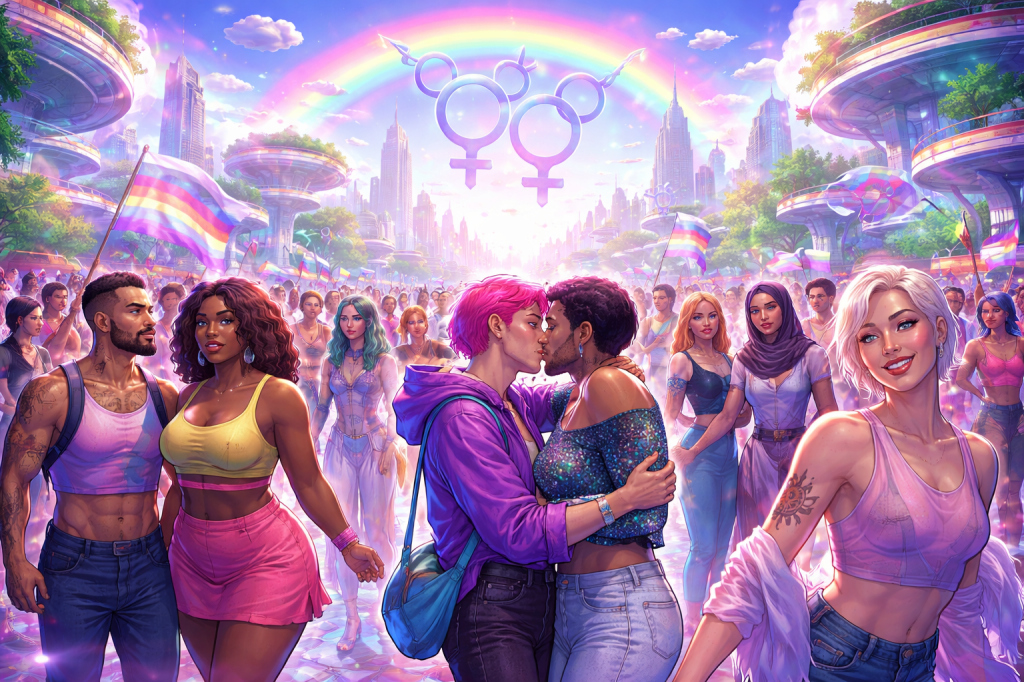
Look carefully. One system produces a moody, almost dystopian androgynous person in a hyper-modern city. Another gives you the familiar Silicon Valley fantasy: glowing towers, sleek people walking into technological destiny. Another shows gender as floating symbols of male/female/nonbinary energy, like a spiritual infographic. The last one produces a rainbow utopia where queerness is aestheticised as festival culture. Different styles, same underlying trick: gender becomes either symbol, spectacle, or mood. In these renderings, gender appears primarily as aesthetic symbolism, technological optimism, or utopian spectacle. What happened to the social structures through which gender operates (institutions, labour, governance, and everyday life)? Do they disappear in the future? This gap underscores a central concern of the conference: how media systems shape the ways gender is imagined, simplified, and circulated, often reproducing dominant cultural narratives rather than critically engaging with the complexities of gendered social life.
Registration Deadlines
We look forward to welcoming participants to the GMSL Quarterly Virtual Conference, April 25–26, 2026, on the theme Mediating Gender Futures. Conference presenter registration will close once all 60 presentation slots are filled, or by April 14, 2026, whichever occurs earlier. Registration for conference attendees will open on April 1, 2026.
For further information, please contact:
Global Media Studies Lab (GMSL)
Email: globalmediastudieslab@gmail.com
WhatsApp: +91 8807876951
 Global Media Studies Lab
Leave a comment